Fly me to the Moon

The world of the spheres

The time-measurement route
The time-measurement route was born from the desire of 5 museums, all dedicated to the watchmaking craft, to offer a synergy allowing tourists, as well as specialists, to discover 5 magnificent collections all complementary to each other, and this over a distance of about 80 km.
A cross-border collaboration between France and Switzerland has developed from Besançon to La Chaux-de-Fonds. They don’t talk about Neuchâtel and the Observatory! PDF File
Musée du Temps, Besançon, France
Musée de l’horlogerie, Morteau, France
Musée de la montre, Villers-le-Lac, France
Musée d’horlogerie du Locle, Suisse
Musée international d’horlogerie, La Chaux-de-Fonds, Suisse


Neuchâtel Tourism
At the heart of time
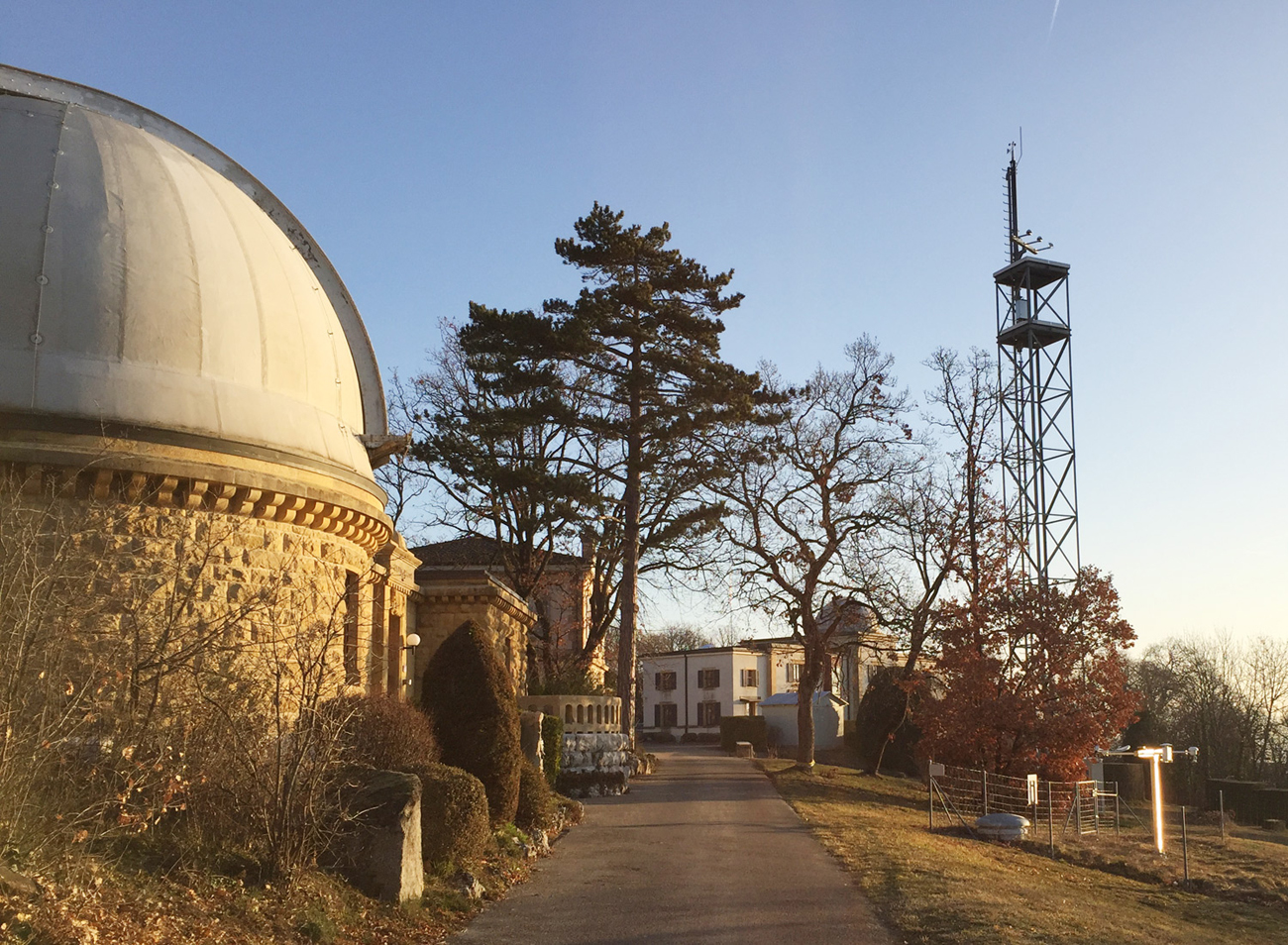
The creation of an exhibition at the Neuchâtel Observatory is an important piece that could complete the offer that Neuchâtel Tourism has developed with its concept “At the heart of time” (Flyer), and “Explore Swiss Watchmaking“.
La création d’une exposition à l’Observatoire de Neuchâtel est une pièce importante qui pourrait venir compléter l’offre que Neuchâtel Tourism offre avec son concept “Au coeur du temps”.
Sideral time: observe the stars to determine the exact time

Yerkes Telescop

Atomic Clock
The first atomic clock was an ammonia absorption line device at 23870.1 MHz built in 1949 at the U.S.
The first accurate atomic clock, a caesium standard based on a certain transition of the caesium-133 atom, was built by Louis Essen and Jack Parry in 1955 at the National Physical Laboratory in the UK.

A brief history of timekeeping
Innovation in Laboratory Time and Frequency, Neuchâtel
Norman Ramsey, in the origin of atomic clocks (French)
