How museums use tone of voice to reveal their hidden personalities

Anna Faherty
Original paper on MuseumNext >

What does your museum sound like? I’m not referring to the chatter of schoolchildren or the ambient hum of dehumidifiers. I mean what do the words you use in marketing, wayfinding and interpretation sound like? More usefully, who do these words sound like?

Every piece of written communication produced by a museum tells visitors something about who the organisation is and what it stands for. The words, punctuation and sentence structures museums employ – and the perspectives they take – have power. They may invite and engage; they more bore or even exclude.

Imagine someone visiting your museum for the first time. Do the external signs sound warm and welcoming? Does the entrance signage invite them in or put them off? Does the wayfinding include terms they understand? Does the interpretation appreciate their lived experience and value their point of view? Does it sound like words pumped out by a faceless institution or does it feel like it was written by a living, breathing individual, complete with personal experience, emotions and flaws?

Animation Course at the HKB | Autumn semester 2019

Teacher: Hugo Ryser

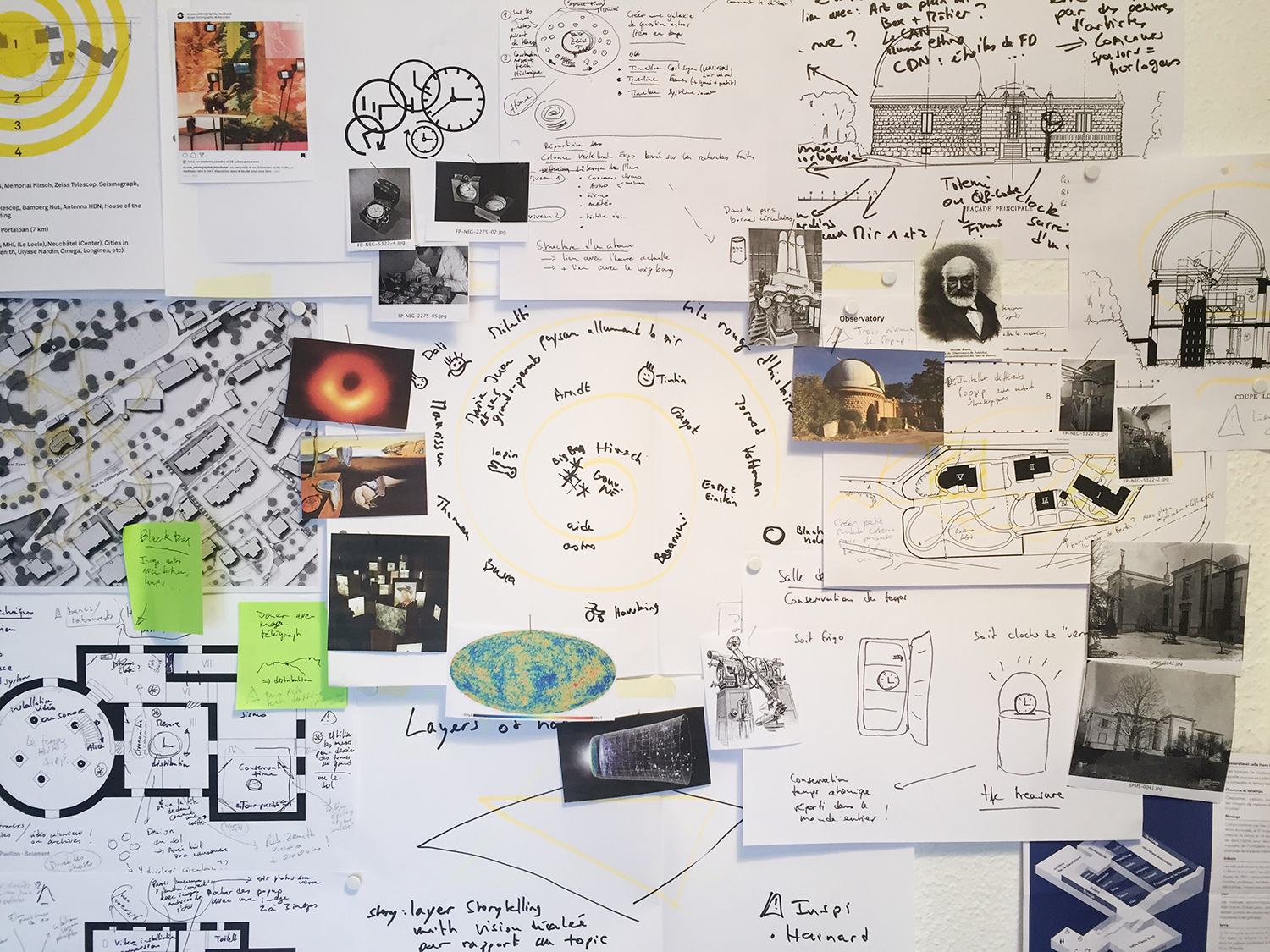
During the autumn semester 2019, I took a training course in animation at the HKB. I developed an animation to present the history of the Neuchâtel Observatory. This experience allowed me to understand the technique and to think about presentation solutions for the public. The idea is to be able to explain different aspects of the Observatory’s history in a didactic way.

Dropbox link on the animation

izi.TRAVEL – Audio guides for museum

STORY
In 2011, we – a team of Dutch innovators – joined forces with a Swiss investor with the aim of connecting cities, museums and their stories with travellers who wanted to explore the world in a brand new, innovative way: via a global, open and free platform. A bit like Facebook or Wikipedia. Although this idea wasn’t anything new, no-one had yet done it on such a large and ambitious scale.

izi.travel

Musée international d’horlogerie (MIH) – La Chaux-de-Fonds, Switzerland

Why take the time to be late?

France Culture Radio

Rehabilitate the backlog to regain time to live with the current injunctions on performance and profitability. Hélène L’Heuillet, psychoanalyst and lecturer in philosophy at the University of Paris-Sorbonne, talks about it in her “Eloge du retard” (Albin Michel, January 2020).

Hélène L’Heuillet, France Culture